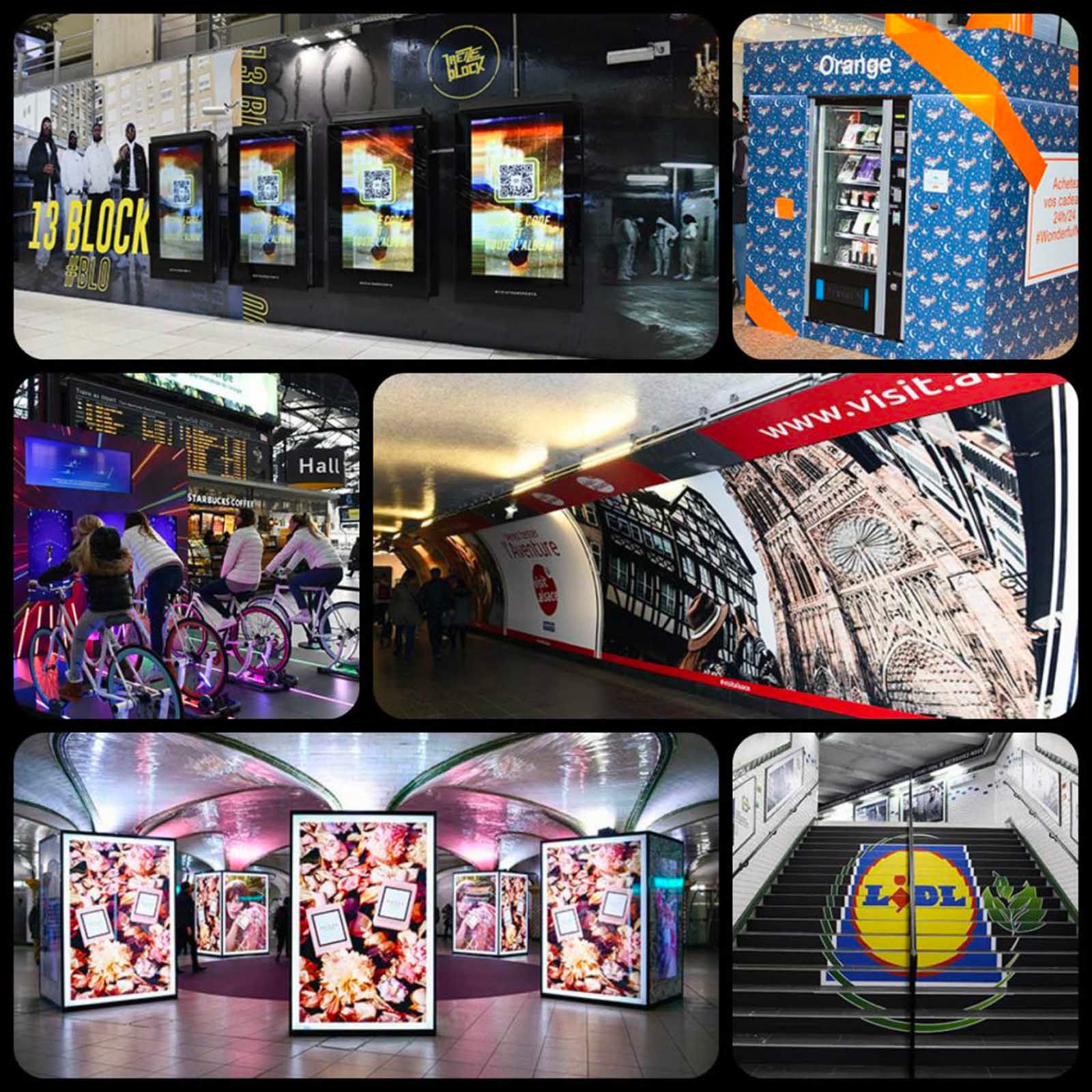
LONG LIVE DIVERSITY!!!
So, what does it look like today? Tadaaaaaaaaaaaaam ... Drum roll ... 120,000 advertising faces including 700 digital screens, 10 possible display formats, found all over the traveler's route, on doors, on steps, on walls, and of course on the platforms! Please! And there's no shortage of formats to carry out a campaign worthy of the name! There are classic displays, a basic of the discipline with variable formats (4×3, 80×120, 40×60, etc.) all benefiting from increased visibility. We pass by and wait in front of these posters for an average of 90 seconds ... that's huge ... and it facilitates the memorization of the message and the image.
Even more so when it moves and lights up! In the digital age, digital displays are invading the corridors of the stations. While they are criticized for the energy they consume (between 6,800 and 12,600 Kwh/year, which is far from eco-responsible, I willingly admit, and the anti-ad leagues even more), the visual pollution they generate, and the available brain time they capture, digital screens are a pure dream for communicators as they add movement to the image, show several products from the same brand, or even adapt the message according to the time of day ... and collect our data in the process.
And what about events? Event marketing and PR thrive well in the metro; there are even spaces that lend themselves to it, such as the famous Salle des Piliers de Saint-Lazare where just recently Gucci launched its new perfume with a lot of advertising and sample distribution. The more spectacular they are, the more the events orchestrated in the metro allow for memorable impressions, enlivening the traveler's journey by playing with the surrounding space, thus breaking their monotony. This tactic is often used for major marketing operations like the release of a blockbuster (ah Shazam and its electric terminal at Lyon station) or the new product from a big brand (the Granola'nd animation stand, yum yum).